
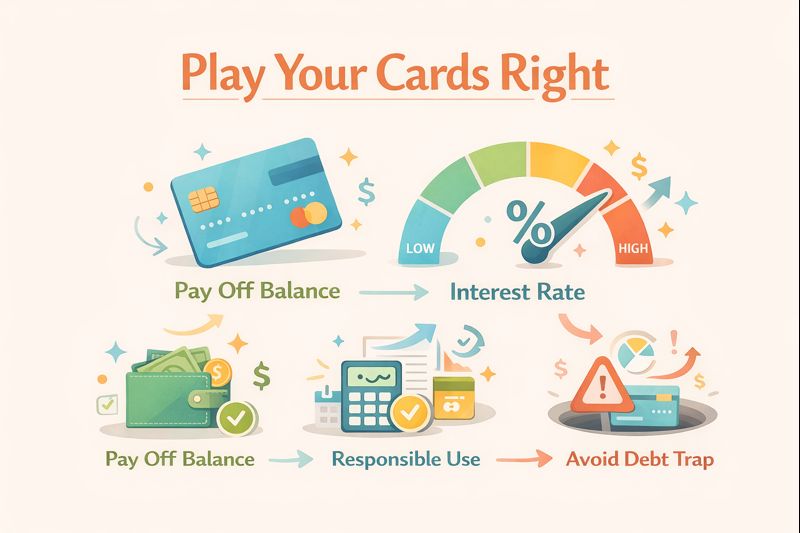
Why credit cards are always stacked against you.
One of the most irresponsible advertising slogans of all time was surely “Don’t put it off, put it on!”, which cheerfully adorned Barclaycard ads in the 1990s. By today’s standards, the idea that encouraging people to take out high-interest loans to buy things they can’t afford was ever acceptable feels astonishing.
The temptation to “put it on the card” at Christmas is enormous. Glittering lights, festive goodwill, and a plastic rectangle whispering it’ll be fine. But it shouldn’t be. The word “credit” sounds oddly comforting, almost like a present. In reality, credit cards would be more honestly named “debt cards” or, better still, “eye-watering interest borrowing cards”.
Interest rates typically sit around 25–30% a year. In effect, credit cards are a very efficient machine for moving money from lots of poorer people into the hands of a relatively small number of richer ones.
The Guardian recently reported that 13% of UK adults had missed three or more credit or bill payments in the past six months. Among 18- to 24-year-olds, the figure jumps to a sobering 29%. That’s bad news for borrowers, but excellent news for bank shareholders. In earlier centuries, people who made money this way were known as usurers, and they weren’t exactly popular dinner guests.
For about ten years, my wife and I decided to live entirely without a credit card. Life became noticeably simpler. There was no debt, no monthly juggling, and no temptation to spend money we didn’t actually have (and would therefore have to earn).
More recently, we’ve grudgingly acquired one, mainly because hiring a car abroad without a credit card is an exercise in frustration. But we never use it for everyday spending, and we pay it off almost immediately – within a few days. The usual advice is to clear the balance within a month, but leave it that long and you risk missing the deadline and watching sneaky little interest charges creep in.
If you’re already carrying a large credit card balance, the sensible move is to cancel the card and replace the debt with a bank loan spread over five or ten years, at a much lower interest rate.
And finally, never splurge on a credit card in the hopeful belief that some magical financial windfall will turn up next month. It won’t.
Leave a Reply